




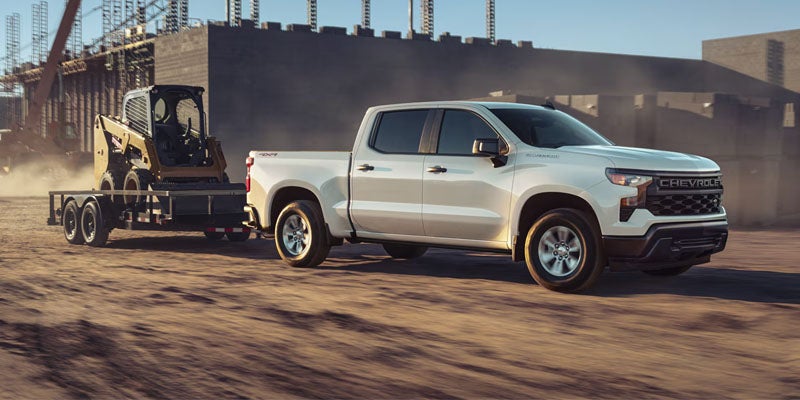
If you're shopping for a new full-size truck, the Chevy Silverado vs Ford F-150 comparison is probably one of the first things on your mind. These two trucks have dominated the segment for decades, and for good reason — both offer capable powertrains, spacious cabins, and serious work credentials. But when it comes to choosing the right one for your needs, the details matter. If you're hauling equipment through central Arkansas or just looking for a dependable truck in Little Rock, AR, understanding what separates these two trucks can save you a lot of time and second-guessing. Towing and Payload: Finding the Best Full-Size Truck for Towing and Durability When most buyers compare trucks, towing capacity is near the top of the list. The 2026 Chevy Silverado 1500 is built to handle serious loads of up to 13,300 lbs wneh properly equipped, with available engine options designed to deliver strong towing capability across a wide range of work and recreational applications. The Silverado's available 5.3L V8 (355 hp, 383 lb-ft of torque) and 6.2L V8 (420 hp, 460 lb-ft of torque) engines are well-regarded for their towing performance and long-term durability. Chevy has invested heavily in making the Silverado a reliable workhorse that holds up over time, which is why it consistently earns recognition as one of the best full-size trucks for towing and durability. The F-150 is also a capable tower, and it offers a turbocharged engine lineup that performs well on paper. However, some drivers find naturally aspirated V8 engines more predictable under heavy load, and the Silverado's powertrain lineup gives buyers that option. Engine Options and Powertrain Flexibility The Chevy Silverado vs Ford F-150 comparison gets interesting when you look at powertrain variety. The Silverado offers a strong selection of engines, including a 2.7L TurboMax ™ four-cylinder, a 5.3-liter V8, and a 6.2-liter V8, as well as a powerful Duramax® 3.0L turbo-diesel that puts out 305 hp and 495 lb-ft of torque. The F-150 leans heavily on turbocharged engines, with options ranging from a base 2.7L twin-turbo V6 to a 3.5L twin-turbo V6 in higher configurations. Turbocharged engines can deliver impressive output, but some owners prefer the simplicity and proven reliability of a V8 for high-demand tasks. Interior, Technology, and Comfort Inside, the 2026 Silverado offers a comfortable cabin with available premium materials, a large available touchscreen, and a wide array of connectivity features. It's a genuinely comfortable truck whether you're on a worksite or a road trip. The Silverado also supports available Super Cruise®, Chevy's hands-free driver assistance technology that includes trailering functionality — a meaningful advantage for those who regularly haul trailers. That kind of tech integration helps the Silverado stand out in a practical, real-world way. The F-150 also offers a strong interior experience, but Chevy's commitment to combining technology with truck-specific utility gives the Silverado an edge for buyers who want both comfort and capability in one package. Reliability and Long-Term Value One of the most important factors in any Chevy Silverado vs Ford F-150 comparison is how each truck holds up over time. Chevy has earned recognition as America's most awarded brand for SUV dependability from J.D. Power for three consecutive years, and that same commitment to quality carries through to the Silverado lineup. For buyers searching for the best full-size truck for towing and durability, long-term reliability is not a minor consideration — it's often the deciding factor. The Silverado's track record and Chevy Certified Service network make it a strong choice for drivers who plan to keep their truck for years and need dependable support along the way. Trim Levels and Customization Both the Silverado and F-150 offer a wide range of trims to fit different budgets and lifestyles. The Silverado lineup spans from work-ready base configurations to fully loaded premium trims, giving buyers the flexibility to get exactly what they need without paying for features they don't want. Whether you're looking for a bare-bones work truck or a fully equipped family vehicle with all the latest technology, the Silverado's trim structure makes it easy to find a match. Visit Bale Chevrolet in Little Rock, AR Ultimately, both the Silverado and the F-150 are strong trucks — but the Chevy Silverado vs Ford F-150 comparison consistently highlights the Silverado's advantages in V8 powertrain options, hands-free trailering technology, long-term reliability, and overall ownership experience. For drivers in Little Rock, AR, who are ready to find the best full-size truck for towing and durability, the 2026 Chevy Silverado is worth a close look. Stop by and explore the full Silverado lineup at Bale Chevrolet, where the team is ready to help you find the right configuration for your needs.

Chevy Maintenance Schedule and Oil Change Intervals: What Every Driver Should Know
Staying on top of your Chevy maintenance schedule and oil change intervals is one of the best things you can do for your vehicle's long-term health. No matter if you're driving a Silverado, Equinox, Trax, or Traverse, routine service keeps your engine running efficiently and helps you avoid costly repairs. This guide breaks the Chevy maintenance schedule down in plain terms, so you can stay ahead of the curve. Understanding Your Chevy Oil Change Intervals Oil change intervals have changed over the years, and Chevy vehicles are smarter about telling you when they need attention. Most Chevrolet models are equipped with the GM Oil Life System, which monitors your driving habits and conditions to calculate when an oil change is actually needed — rather than relying on a fixed mileage number alone. For most drivers using full synthetic oil, you can generally expect oil change intervals ranging from 7,500 to 10,000 miles under normal driving conditions. However, if you frequently tow heavy loads, drive in stop-and-go traffic, or operate in extreme temperatures, your oil life may deplete faster. The key rule: never ignore the oil life monitor when it drops to 10% or lower. That's your Chevy's way of telling you it's time to change the oil What Your Chevy Maintenance Schedule Covers Beyond Oil Changes Your Chevy maintenance schedule is more than changing the oil. Keeping up with the full scope of recommended service intervals helps your vehicle perform the way it was designed to. Here's a general overview of what to expect at key mileage milestones. Around every 7,500 miles, in addition to your oil change, it's a good idea to have your tire pressure checked and your vehicle inspected for any fluid leaks or unusual wear. Tire rotations are typically recommended every 7,500 miles as well, and staying consistent with this helps extend the life of your tires. At 15,000-mile intervals, many Chevy owners have cabin air filters inspected. A clogged filter can impact air quality inside the cabin and reduce the efficiency of your climate control system. It's easy to overlook but makes a real difference. The 30,000-mile mark is a meaningful checkpoint on your Chevy maintenance schedule. This is often when engine air filters need to be replaced, and it's a smart time to have your brake fluid, coolant levels, and suspension components thoroughly evaluated by a technician. At 60,000 miles, more significant items come into play. Spark plugs on many Chevy models are designed to last up to 100,000 miles, but a thorough inspection at this stage is still worthwhile. Transmission fluid and brake fluid may also need attention depending on your driving patterns and the specific model you own. How to Know When to Service Your Chevy Vehicle One of the most helpful features available on many Chevrolet models is the Driver Information Center, which gives you real-time reminders about when to service your Chevy vehicle. Alongside the oil life monitor, it may alert you to other service needs such as tire rotation reminders and low fluid warnings. Beyond the dashboard, it's worth keeping a simple maintenance log — especially if you've purchased a used Chevy or recently switched service locations. Knowing your vehicle's history makes it easier to stay on schedule. Your owner's manual is the definitive source for your specific model's service requirements. Every Chevy model has its own set of specifications, and the manual takes the guesswork out of the equation. Tips for Staying on Track With Your Chevy Maintenance Schedule One of the easiest ways to stay on your Chevy maintenance schedule is to simply schedule your next service appointment before you leave after your current one. Drivers in Little Rock, AR, who put a lot of miles on their vehicles quickly may find that their service intervals come up faster than expected. Adjusting your schedule to reflect your actual driving patterns is always the smarter approach. It also helps to think of routine maintenance as a long-term investment. Regular oil changes, filter replacements, and fluid checks protect components that are expensive to replace and keep your warranty coverage intact. Chevy Certified Service: What to Expect Chevrolet's Certified Service program is designed to provide expert care using the right tools, parts, and technicians for your vehicle. Certified Service technicians are trained specifically on Chevrolet models, which means they're familiar with your vehicle's systems and service requirements. When you bring your vehicle in for routine maintenance under your Chevy maintenance schedule, a Certified Service visit typically includes a multi-point inspection alongside your scheduled service. This gives your technician the opportunity to flag potential concerns before they become larger problems. Keep Your Chevy Running Strong With the Right Maintenance Schedule Understanding your Chevy maintenance schedule and oil change intervals is the first step toward keeping your vehicle in great shape. From routine oil changes and tire rotations to fluid checks and filter replacements, every service interval plays a role in protecting your vehicle. Stop by Bale Chevrolet to speak with a service advisor, check your owner's manual, or use the tools built right into your Chevy to stay informed and on schedule. Your vehicle will thank you for it.