



Blog / 2026 Chevrolet Suburban

Chevy Tahoe vs Chevy Suburban Comparison: Which Full-Size SUV Is Right for You?

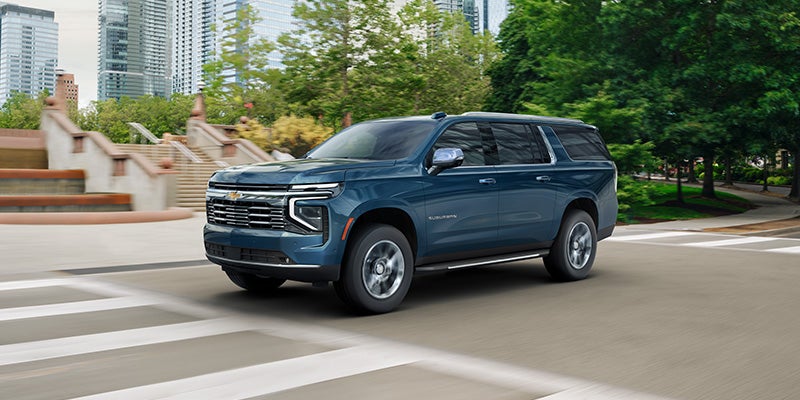
Blue Chevrolet Suburban driving through city streets with trees and buildings

If you're shopping for a large Chevy SUV and trying to decide between two of the brand's most iconic nameplates, you've landed in the right place. This Chevy Tahoe vs Chevy Suburban comparison breaks down the key differences, so you can make an informed decision before visiting the lot.

Both models share the same platform, the same available powertrains, and the same reputation for capability — but they aren't identical. Knowing where they differ can save you time and help you match the right vehicle to your lifestyle.

Size and Interior Space

When it comes to which full-size SUV has more space and towing capability, the Suburban holds a clear advantage on the space side. The Suburban is noticeably longer than the Tahoe, and that extra length translates directly into more third-row legroom and significantly more cargo volume with a best in class 144.5 cu ft max cargo volume.

The Tahoe is no slouch when it comes to passenger room, and it has a max cargo volume of 122.7 cu ft with the rear seats folded down, but families who routinely carry 7 or 8 passengers as well as luggage will feel the difference. If you're frequently loading up for road trips or hauling gear for a large family, the Suburban's extra cargo room may be the deciding factor.

Towing and Capability

Both the 2026 Tahoe and 2026 Suburban are serious tow vehicles when properly equipped. Both are available with a 5.3L V8 or a 6.2L V8 engine, and both offer similar maximum towing ratings (8,400 lbs for the Tahoe, 8,300 lbs for the Suburban) when configured comparably.

So, if you're towing a boat, a horse trailer, or a camper, either SUV is built for the job. The question of which full-size SUV has more space and towing muscle comes down to how you plan to use it — the Suburban's additional length doesn't greatly reduce its towing capacity, which makes it an especially compelling choice for buyers who want space and towing capacity.

Maneuverability and Daily Driving

The Tahoe's shorter overall length makes it noticeably easier to maneuver in parking garages, city streets, and tighter driveways. If you're primarily using your SUV for school runs, errands, and daily commutes, the Tahoe's more compact footprint can be a benefit.

The Suburban, while still drivable in most settings, is best suited to drivers who prioritize passenger and cargo capacity and aren't deterred by its larger dimensions. Both models benefit from available camera systems and parking aids that help manage their size on the road.

Features and Technology

In a Chevy Tahoe vs Chevy Suburban comparison, the feature sets are largely identical across equivalent trim levels. Both are available with available Super Cruise® — Chevy's hands-free driving technology — along with a large touchscreen, available rear-seat entertainment, wireless charging, and a built-in hotspot.

Available safety features, driver assistance technology, and comfort amenities are consistent across both models at each trim level. So, if technology is your primary focus, you won't need to choose one over the other based on features alone.

Which One Is Right for Your Family?

For most buyers, the choice comes down to how much space you truly need. The Tahoe is a well-rounded, capable, and slightly easier-to-drive option that still delivers impressive room and towing capability. The Suburban is the better choice when maximum passenger comfort and cargo space are non-negotiable priorities.

Stop by Bale Chevrolet in Little Rock, AR

If you're still weighing the Chevy Tahoe vs Chevy Suburban comparison after reading this, the best next step is to see both vehicles in person. Sitting in the third row, loading cargo, and taking a test drive will quickly clarify which model fits your day-to-day life. Stop by Bale Chevrolet, serving drivers throughout Little Rock, Arkansas, and let the team help you find the right full-size SUV for your family's needs.

Posted in:

Related Posts

Engine oil being poured into car engine through orange funnel

Chevy Maintenance Schedule and Oil Change Intervals: What Every Driver Should Know

Staying on top of your Chevy maintenance schedule and oil change intervals is one of the best things you can do for your vehicle's long-term health. No matter if you're driving a Silverado, Equinox, Trax, or Traverse, routine service keeps your engine running efficiently and helps you avoid costly repairs. This guide breaks the Chevy maintenance schedule down in plain terms, so you can stay ahead of the curve. more Understanding Your Chevy Oil Change Intervals Oil change intervals have changed over the years, and Chevy vehicles are smarter about telling you when they need attention. Most Chevrolet models are equipped with the GM Oil Life System, which monitors your driving habits and conditions to calculate when an oil change is actually needed — rather than relying on a fixed mileage number alone. For most drivers using full synthetic oil, you can generally expect oil change intervals ranging from 7,500 to 10,000 miles under normal driving conditions. However, if you frequently tow heavy loads, drive in stop-and-go traffic, or operate in extreme temperatures, your oil life may deplete faster. The key rule: never ignore the oil life monitor when it drops to 10% or lower. That's your Chevy's way of telling you it's time to change the oil What Your Chevy Maintenance Schedule Covers Beyond Oil Changes Your Chevy maintenance schedule is more than changing the oil. Keeping up with the full scope of recommended service intervals helps your vehicle perform the way it was designed to. Here's a general overview of what to expect at key mileage milestones. Around every 7,500 miles, in addition to your oil change, it's a good idea to have your tire pressure checked and your vehicle inspected for any fluid leaks or unusual wear. Tire rotations are typically recommended every 7,500 miles as well, and staying consistent with this helps extend the life of your tires. At 15,000-mile intervals, many Chevy owners have cabin air filters inspected. A clogged filter can impact air quality inside the cabin and reduce the efficiency of your climate control system. It's easy to overlook but makes a real difference. The 30,000-mile mark is a meaningful checkpoint on your Chevy maintenance schedule. This is often when engine air filters need to be replaced, and it's a smart time to have your brake fluid, coolant levels, and suspension components thoroughly evaluated by a technician. At 60,000 miles, more significant items come into play. Spark plugs on many Chevy models are designed to last up to 100,000 miles, but a thorough inspection at this stage is still worthwhile. Transmission fluid and brake fluid may also need attention depending on your driving patterns and the specific model you own. How to Know When to Service Your Chevy Vehicle One of the most helpful features available on many Chevrolet models is the Driver Information Center, which gives you real-time reminders about when to service your Chevy vehicle. Alongside the oil life monitor, it may alert you to other service needs such as tire rotation reminders and low fluid warnings. Beyond the dashboard, it's worth keeping a simple maintenance log — especially if you've purchased a used Chevy or recently switched service locations. Knowing your vehicle's history makes it easier to stay on schedule. Your owner's manual is the definitive source for your specific model's service requirements. Every Chevy model has its own set of specifications, and the manual takes the guesswork out of the equation. Tips for Staying on Track With Your Chevy Maintenance Schedule One of the easiest ways to stay on your Chevy maintenance schedule is to simply schedule your next service appointment before you leave after your current one. Drivers in Little Rock, AR, who put a lot of miles on their vehicles quickly may find that their service intervals come up faster than expected. Adjusting your schedule to reflect your actual driving patterns is always the smarter approach. It also helps to think of routine maintenance as a long-term investment. Regular oil changes, filter replacements, and fluid checks protect components that are expensive to replace and keep your warranty coverage intact. Chevy Certified Service: What to Expect Chevrolet's Certified Service program is designed to provide expert care using the right tools, parts, and technicians for your vehicle. Certified Service technicians are trained specifically on Chevrolet models, which means they're familiar with your vehicle's systems and service requirements. When you bring your vehicle in for routine maintenance under your Chevy maintenance schedule, a Certified Service visit typically includes a multi-point inspection alongside your scheduled service. This gives your technician the opportunity to flag potential concerns before they become larger problems. Keep Your Chevy Running Strong With the Right Maintenance Schedule Understanding your Chevy maintenance schedule and oil change intervals is the first step toward keeping your vehicle in great shape. From routine oil changes and tire rotations to fluid checks and filter replacements, every service interval plays a role in protecting your vehicle. Stop by Bale Chevrolet to speak with a service advisor, check your owner's manual, or use the tools built right into your Chevy to stay informed and on schedule. Your vehicle will thank you for it.

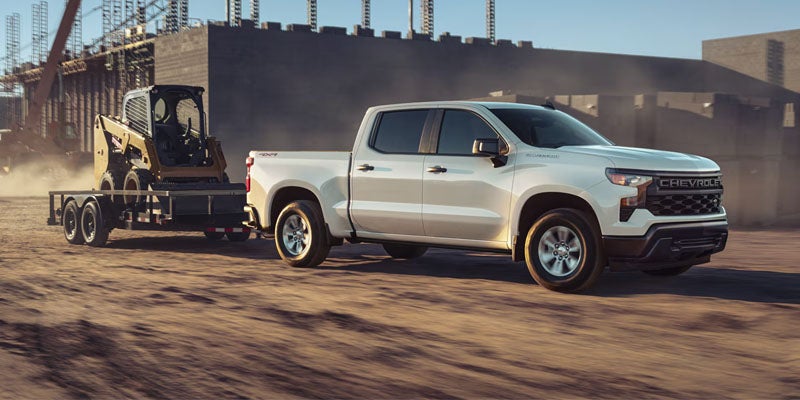
White Chevrolet Silverado towing construction equipment on job site

Chevy Silverado vs Ford F-150 Comparison: Which Full-Size Truck Is Right for You?

If you're shopping for a new full-size truck, the Chevy Silverado vs Ford F-150 comparison is probably one of the first things on your mind. These two trucks have dominated the segment for decades, and for good reason — both offer capable powertrains, spacious cabins, and serious work credentials. But when it comes to choosing the right one for your needs, the details matter. If you're hauling equipment through central Arkansas or just looking for a dependable truck in Little Rock, AR, understanding what separates these two trucks can save you a lot of time and second-guessing. more Towing and Payload: Finding the Best Full-Size Truck for Towing and Durability When most buyers compare trucks, towing capacity is near the top of the list. The 2026 Chevy Silverado 1500 is built to handle serious loads of up to 13,300 lbs wneh properly equipped, with available engine options designed to deliver strong towing capability across a wide range of work and recreational applications. The Silverado's available 5.3L V8 (355 hp, 383 lb-ft of torque) and 6.2L V8 (420 hp, 460 lb-ft of torque) engines are well-regarded for their towing performance and long-term durability. Chevy has invested heavily in making the Silverado a reliable workhorse that holds up over time, which is why it consistently earns recognition as one of the best full-size trucks for towing and durability. The F-150 is also a capable tower, and it offers a turbocharged engine lineup that performs well on paper. However, some drivers find naturally aspirated V8 engines more predictable under heavy load, and the Silverado's powertrain lineup gives buyers that option. Engine Options and Powertrain Flexibility The Chevy Silverado vs Ford F-150 comparison gets interesting when you look at powertrain variety. The Silverado offers a strong selection of engines, including a 2.7L TurboMax ™ four-cylinder, a 5.3-liter V8, and a 6.2-liter V8, as well as a powerful Duramax® 3.0L turbo-diesel that puts out 305 hp and 495 lb-ft of torque. The F-150 leans heavily on turbocharged engines, with options ranging from a base 2.7L twin-turbo V6 to a 3.5L twin-turbo V6 in higher configurations. Turbocharged engines can deliver impressive output, but some owners prefer the simplicity and proven reliability of a V8 for high-demand tasks. Interior, Technology, and Comfort Inside, the 2026 Silverado offers a comfortable cabin with available premium materials, a large available touchscreen, and a wide array of connectivity features. It's a genuinely comfortable truck whether you're on a worksite or a road trip. The Silverado also supports available Super Cruise®, Chevy's hands-free driver assistance technology that includes trailering functionality — a meaningful advantage for those who regularly haul trailers. That kind of tech integration helps the Silverado stand out in a practical, real-world way. The F-150 also offers a strong interior experience, but Chevy's commitment to combining technology with truck-specific utility gives the Silverado an edge for buyers who want both comfort and capability in one package. Reliability and Long-Term Value One of the most important factors in any Chevy Silverado vs Ford F-150 comparison is how each truck holds up over time. Chevy has earned recognition as America's most awarded brand for SUV dependability from J.D. Power for three consecutive years, and that same commitment to quality carries through to the Silverado lineup. For buyers searching for the best full-size truck for towing and durability, long-term reliability is not a minor consideration — it's often the deciding factor. The Silverado's track record and Chevy Certified Service network make it a strong choice for drivers who plan to keep their truck for years and need dependable support along the way. Trim Levels and Customization Both the Silverado and F-150 offer a wide range of trims to fit different budgets and lifestyles. The Silverado lineup spans from work-ready base configurations to fully loaded premium trims, giving buyers the flexibility to get exactly what they need without paying for features they don't want. Whether you're looking for a bare-bones work truck or a fully equipped family vehicle with all the latest technology, the Silverado's trim structure makes it easy to find a match. Visit Bale Chevrolet in Little Rock, AR Ultimately, both the Silverado and the F-150 are strong trucks — but the Chevy Silverado vs Ford F-150 comparison consistently highlights the Silverado's advantages in V8 powertrain options, hands-free trailering technology, long-term reliability, and overall ownership experience. For drivers in Little Rock, AR, who are ready to find the best full-size truck for towing and durability, the 2026 Chevy Silverado is worth a close look. Stop by and explore the full Silverado lineup at Bale Chevrolet, where the team is ready to help you find the right configuration for your needs.

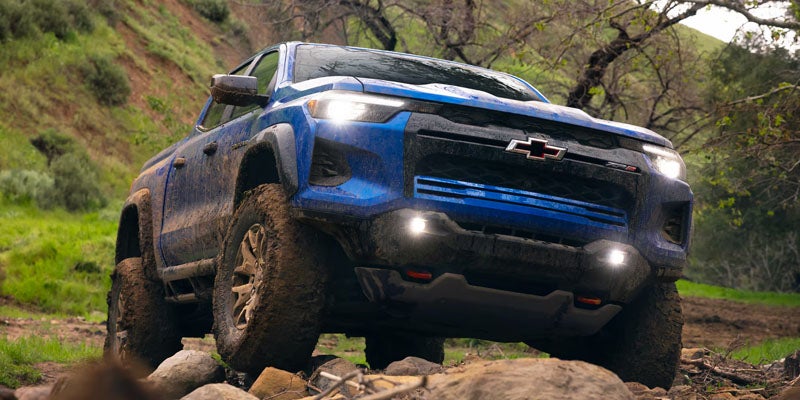
Blue Chevrolet pickup navigating muddy off-road terrain over rocks

2026 Chevy Colorado Off-Road Capabilities: What Makes This Midsize Truck Trail-Ready

If you've been searching for a truck that can handle both your daily drives and a weekend on rough terrain, the 2026 Chevy Colorado’s off-road capabilities might be exactly what you're looking for. This midsize pickup doesn't ask you to choose between comfort and capability — it delivers both, with a lineup of trims built specifically for drivers who want to push beyond the pavement. more A Powertrain Built for Tough Terrain Every 2026 Chevy Colorado off-road adventure starts under the hood. The standard 2.7L TurboMax® engine produces 310 hp and 430 lb-ft of torque — enough to handle demanding trails, steep inclines, and towing needs all at once. That torque figure is best-in-class for standard output in its segment, which means you're getting serious pulling power without having to step up to a full-size truck. Paired with an 8-speed automatic transmission, the Colorado delivers smooth, responsive power no matter if you're on the highway or crawling through rugged terrain. Trail Boss: Off-Road Ready Right From the Factory The Trail Boss trim is off-road ready right from the get-go. It comes with a 2-in factory-installed lift, 18-in wheels with in 32-in all-terrain tires, and a 2-speed automatic transfer case — all straight from the factory floor. It also includes four selectable drive modes and an off-road performance display, giving you the ability to fine-tune how the truck responds to changing conditions. The transfer case shield adds an extra layer of underbody protection when the trail gets rocky. ZR2: The Most Capable Colorado on the Market When it comes to the best midsize truck for adventure driving, MotorTrend called the Colorado ZR2 "the best midsize off-road pickup truck you can spend money on." That's a strong endorsement, and the specs back it up. The ZR2 comes equipped with a 3-in factory-installed lift and high-performance suspension, along with Multimatic DSSV dampers that are purpose-built for rough terrain. It rolls on 17-in wheels fitted with 33-in mud-terrain tires, and it adds a fifth selectable drive mode called Baja — exclusive to the ZR2 — that optimizes power delivery and traction control on sandy surfaces. ZR2 Bison: The Pinnacle of Factory Off-Road Engineering If ZR2 isn't enough, the ZR2 Bison takes the 2026 Chevy Colorado’s off-road capability to its absolute ceiling. Created in collaboration with American Expedition Vehicles (AEV), the Bison adds features that go well beyond what you'll find on most factory trucks. It rides on massive 35-in mud-terrain tires and has 12.2 in of ground clearance. Five boron steel skid plates protect critical underbody components from rocks and debris. Front and rear jounce control dampers have been performance-tested in the Best In The Desert series — a punishing desert race environment that validates real-world off-road durability. The ZR2 Bison holds best-in-class records for ground clearance, breakover angle, and underbody protection in its segment, making it the clear choice for drivers who never want terrain to be a limiting factor. Selectable Drive Modes: Adapting to Any Condition The Colorado allows you to dial in your performance using selectable drive modes. Depending on your trim, you can access up to five modes designed for different environments. Normal mode handles your everyday driving efficiently. Off-Road mode boosts traction on loose surfaces like mud, gravel, and deep snow. Terrain mode is ideal for steep hills or crawling over obstacles, with automatic brake assistance for added control. Tow/Haul mode, available on select trims, optimizes performance when you're pulling a heavy load. And on the ZR2, Baja mode is specifically calibrated for high-speed desert running. Smart Technology That Enhances the Off-Road Experience The 2026 Chevy Colorado off-road experience isn't just about hardware — the truck's technology lineup also plays a meaningful role on the trail. Every Colorado comes standard with an 11.3-in center touchscreen and an 11-in digital Driver Information Center, which is best-in-class for standard display size. An available trailering app helps you manage towing, while available underbody cameras give you a view of what's directly beneath the truck — a useful feature when navigating rocky terrain where you can't see the ground from the driver's seat. Up to 10 available camera views keep you informed no matter the angle. Google built-in, Apple CarPlay®, and Android Auto™ compatibility come standard, so you stay connected even when you're far from civilization. Safety Features That Work on and Off the Road Every Colorado comes standard with Chevy Safety Assist, a package of six driver assistance features that work across different driving environments. That package includes Forward Collision Alert, Automatic Emergency Braking, Front Pedestrian Braking, Lane Keep Assist with Lane Departure Warning, Following Distance Indicator, and IntelliBeam® Auto High Beams. Visit Bale Chevrolet to Explore the 2026 Colorado Lineup The 2026 Chevy Colorado’s off-road capabilities make a strong case for drivers who want a truck that's genuinely built for adventure — not just styled to look the part. From the Trail Boss to the ZR2 Bison, there's a Colorado trim configured for nearly every level of off-road ambition. Stop by Bale Chevrolet to see the full lineup in person, take a test drive, and find the trim that fits the way you drive. The trail is waiting — and the Colorado is ready.